


Artificial intelligence has changed quite a lot about agriculture, with multiple practical applications across the domain. By now, we’ve moved from the initial hype stage to steady adoption, and more case studies are emerging every season. It’s finally time for a sober, pragmatic look at the actual and calculable benefits of AI in agriculture. What are they? Where is the line between what’s useful for the farmer, on the one hand, and what’s intriguing for an investor, on the other? Here, we explore not just how AI helps farmers, but where the benefits are immediate vs. where they are long-term or waiting for better datasets and improved tech to fully appear.
The current role of AI in agriculture
There seem to be two worlds when it comes to artificial intelligence in agriculture: that of headlines, keynotes, and buzzwords – and that of quieter adoption in the field. While the former portrays AI as an ultimate disruptor (“automate everything, fix everything”), the latter is arguably more fascinating than the marketing messaging: this is where things get really done.
Spurred by both sides, hype and farm needs, the global market for AI in agriculture is projected to grow from $2.8 billion in 2025 to $8.5 billion by the end of 2030. This growing interest would be impossible without a decades-long process of digitization: GPS-guided tractors, yield monitoring, satellite use, and so on are the foundation for AI adoption.
Naturally, this adoption of AI tech is uneven and only as strong as the basis: we should keep in mind that while in the US, around 68% of large crop farms use precision agriculture, in other places, digital penetration as a whole is only about 10%.
Nevertheless, AgTech is successfully testing innovation where the infrastructure is already in place. Startups in this domain explore several main directions:
-
- Crop monitoring and analytics – analyzing satellite or drone imagery to detect crop stress, disease, and other intervention-requiring patterns
- Precision input management – optimizing the application of fertilizers, pesticides, irrigation, etc.
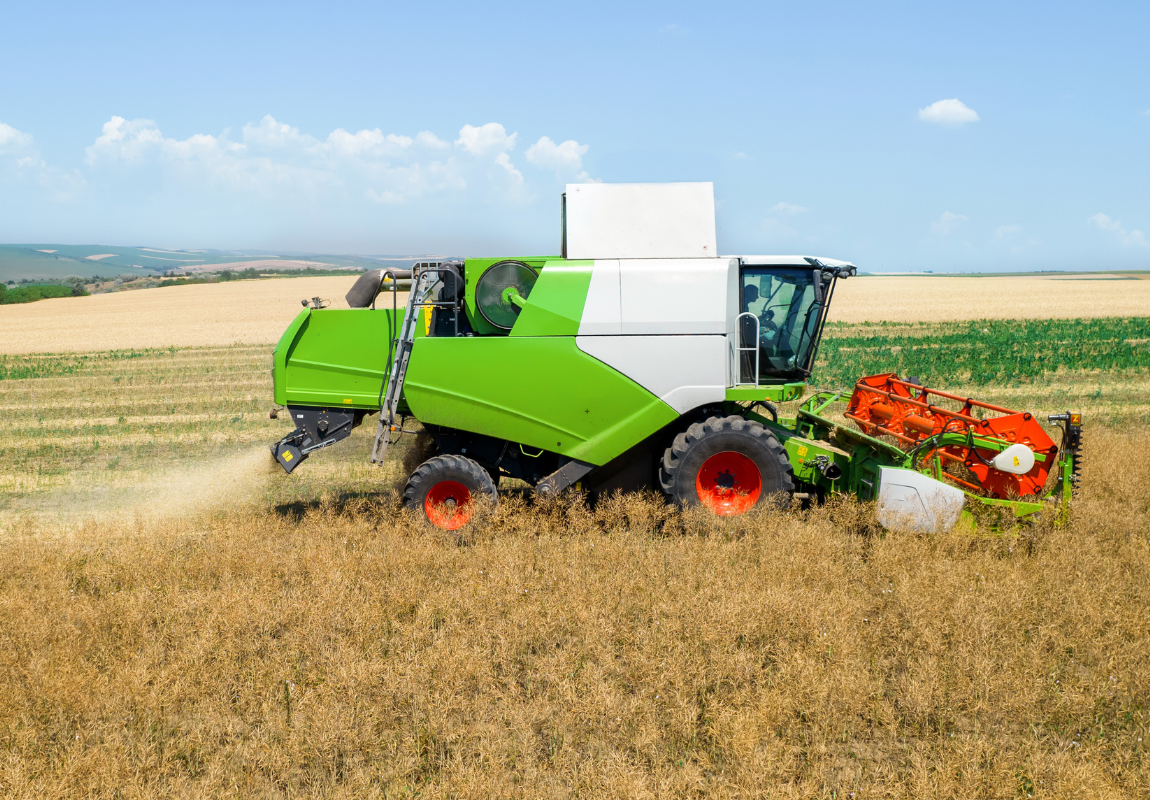
- Autonomous, semi-autonomous machinery and robotics
- Agricultural forecasting and decision support – yield prediction, supply chain risk assessment, etc.
The landscape is not limited to startups, either. Companies like John Deere or CNH integrate AI capabilities directly into farm machinery and digital platforms, often gaining an advantage over digital-first startups in being traditionally closer to the users.
When it comes to actual adoption, overall, the role of artificial intelligence is that of an emerging layer of intelligence over the existing systems. For instance, in Australia, around 60% of farmers already rely on digital tools or data analytics in their operations – the change being, there’s now AI behind the already digitized processes.
Which makes the interplay between the startup initiatives and farmer adoption all the more interesting – the main factor being, where more real results are shown.
Precision farming on the rise
Before looking at the concrete benefits of AI in the agricultural sector, it is impossible not to mention the most obviously useful application: precision farming. The basic idea is simple: farmland is not uniform, so treating an entire field as uniform is a waste of resources.
Precision farming relies on data from satellites, soil sensors, GPS-guided machinery to manage different parts of a field the way they need. This is where artificial intelligence gets to shine – its ability to analyze large volumes of data and draw conclusions from it means this process can be automated enough to be economically feasible. In other words, the effort put into analyzing the data is outweighed by the benefits of applying water and chemicals selectively.
For example, AI-assisted spraying systems developed by companies like John Deere use cameras mounted on the sprayer to scan the ground. Computer vision distinguishes weeds from crops, so that the system sprays herbicide only where weeds are detected.
As of today, precision farming is the most mature and commercially successful application of AI in agriculture. Its impact is recognized by the USDA and the Food and Agriculture Organization as the main source of the measurable benefits from agricultural AI as such.
Proven benefits of AI in agriculture so far
However, the broader picture is not limited to precision agriculture alone. Below are the most readily observable benefits – and while a lion share is associated with precision farming, there are several other domains that yield good results, as well.
#1 Reduced input use (fertilizer, pesticides, water)
Quite predictably, precision agriculture systems are on top of the list. These include smart irrigation scheduling, drone-based disease detection, and computer vision-assisted pesticide spraying.
Overall, with fertilizers, VRA (variable rate application) allows for about 10-20% reduction in use. Targeted pesticide application reduces use by 15-40% on average, while irrigation scheduling with AI helps save about 20-30% of water. These figures are, by now, observed across various case studies and somewhat likely to become industry benchmarks for the future. At the same time, specific cases under specific circumstances can demonstrate higher numbers – for example John Deere’s See & Spray systems reportedly reduced herbicide use by 60-70% in certain weed conditions.
#2 Yield improvements
As AI is used to help optimize planting density, fertilizer timing, and pest detection, yield increases are usually at about 5-15%, depending on the crop and location. This is a more modest figure than typically advertised, but it is demonstrated quite consistently.
#3 Early detection of pests and disease
Computer vision can be applied to various sources of images, from drones and tractor cameras to smartphones, for early intervention. This, by now, routinely helps reduce crop loss by 5-10%. When the problem of lighting conditions and crop variability is solved, and more labeled datasets are available, this number can grow further.
#4 Labor savings and automation
While fully automated farms as a phenomenon are still waiting for enough case studies to pass a verdict, separate automation technologies, like those by Blue River Technology and Trimble Inc. are already showing results. Estimated benefits include about 10-25% reduction in manual scouting labor and savings in high-labor crops like fruit and vegetables.
#5 Better forecasting and risk management
While the benefits of forecasting are harder to quantify, AI models are getting better at predicting weather impact, yield, pest outbreaks, as well as market demand. In practice, this translates to better harvest planning and optimized logistics, with less spoilage.
When does the use of AI for agriculture yield the fastest ROI?
The economic return from agricultural AI largely depends on what problem the technology is solving. In practice, the fastest ROI is observed when dealing directly with expensive inputs, including labor.
AI-powered VRA is a powerful example, especially with fertilizer costs going up already, and the situation exacerbated by the 2026 Middle East developments. For instance, if we presume that the fertilization costs for wheat in Europe are at €250–300 per hectare, VRA reducing their use by 10-20% with the same yield is already a good result:
- suppose a 300-hectare grain farm spends about €280 per hectare;
- VRA reduces fertilizer use by 20%, with the cost now at about €224 per hectare;
- savings are at roughly €56 per hectare per season;
- for the entire farm, this translates into €16,800 in annual fertilizer savings.
If to VRA, we add crop monitoring and AI decision support, the combination will simultaneously reduce total input costs by 5-15%, with several percent increase in yields. For our hypothetical 300-hectare farm, if we suppose some €700 per hectare per year, this means €21,000 in savings per year across the entire farm.
This is, of course, a generic scenario – across most studies, the fastest ROI tends to be observed under three conditions: (1) large farm size, where technologies scale well, (2) high initial input costs (fertilizer, crop protection), (3) high field variability, especially in moisture conditions.
In other words, the fastest ROI is for direct addressing of cost inefficiencies. However, in many situations, it is the long-term benefits such as risk mitigation and supply chain stability that are more valuable for the business.
Artificial intelligence and sustainability goals
A separate branch of AI benefits in agriculture has to do with sustainability rather than economic factors and ROI. Surprisingly to some, though, the two are very closely intertwined in this case. In other words, what AI is already good at doing – minimizing inputs, improving planning (and thus reducing waste) and matching agricultural practices to the terrain – is beneficial for both profitability and sustainability.
Fewer chemicals like fertilizers and pesticides mean less runoff into rivers and groundwater, which, in turn, protects biodiversity. AI-assisted irrigation helps not just conserve water resources but also reduce energy use for pumping.
As for CO2 emissions, even though AI doesn’t directly cut these, it helps reduce emissions per unit of food produced: less fertilizer means lower N2O emissions from soil, more efficient machinery operation means less fuel is burnt.
On a single farm, these effects may be modest, but scaled across millions of hectares, this is meaningful enough for agencies like the FAO and OECD to assign AI a strategic role in sustainability strategies.
In essence, AI contributes to several UN Sustainable Development Goals at once:
- SDG 2: Zero Hunger – higher yields with fewer resources.
- SDG 6: Clean Water and Sanitation – reduced fertilizer and pesticide runoff.
- SDG 12: Responsible Consumption and Production – more efficient use of inputs.
- SDG 13: Climate Action – lower emissions per unit of production.
However, AI is not a silver bullet. Most systems are still applied in industrial monoculture farms, so biodiversity gains or soil regeneration require complementary practices, such as crop rotation, cover cropping, or regenerative agriculture. Its effects, as of today, are the byproducts of efficiency gains it allows.
Other applications of AI in agriculture
The discourse around AI is as quick to label some innovations as “burning money” as it is quick to fall in love with them initially. Beyond the areas where the benefits of AI are immediately tangible – usually connected to precision agriculture – there is also a wide variety of other uses, where benefits are context-dependent. Many of these are actually promising to say the least, but are still in early adoption stages.
Autonomous machinery and robotics
Currently, AI-powered robots and self-driving tractors are still more of an inspiring novelty than a surefire way to increase productivity. They promise labor savings and higher precision, but also require several conditions to be truly beneficial. First of all, they are primarily things destined for large farms, since the upfront investment is still high. Secondly, not all crop types withstand mechanical handling: robots still struggle with delicate produce. Finally, there’s the real world where things are unpredictable: weather, soil, plant growth present another layer of complexity on top of the tasks posed for the automata.
AI-assisted breeding and genomics
There are experiments with ML models that can help with selective breeding programs, improving disease resistance, drought tolerance, etc. The main obstacle here is the large, high-quality datasets of phenotypes and genotypes that are still to come. In addition to that, the investment horizons are quite long-term, since breeding cycles take years. Strategically, however, this is a high-value direction of development.
Advanced supply chain and market optimization
Arguably the most mature of these uses of AI is the analysis of market demand and logistics aimed at reducing spoilage and optimizing harvest timing. To make this truly work, the industry needs more reliable data on market trends, on the one hand, and a sufficient scale to impact revenue.
Environmental monitoring and climate adaptation
AI can also process satellite imagery, weather data, and soil measurements to detect flooding risk, soil erosion, or drought stress. The trick here is to have the models trained for local climate and soil realities, not generic datasets. The farmers also need to be willing to adjust practices based on recommendations, so the two factors will likely very slowly improve and influence each other until the technology is truly utilized at scale.
The fact that these AI applications are not included in the main list of benefit-yielders does not mean they are inherently unprofitable – rather, they are highly context-sensitive at the moment, and are essentially waiting for either better datasets or the right market conditions to fulfill their promise. They are, in other words, the cutting edge of agricultural tech development, where risks are high, but so is the potential of carving an entire market niche in the future.
Conclusions
Agriculture is one of those industries where the results of AI are the most tangible. While they are not exactly what the early hype (and anxieties) suggested, instead of making all farms fully autonomous and replacing farmers with robotics, artificial intelligence is already helping use inputs more efficiently, detect problems earlier, and make better business decisions.
From a farming business perspective, the most valuable AI tools are understandably those that directly address the cost-intensive aspects: fertilization, spraying, irrigation. This is where clear benchmarks are about to be established, and where quiet adoption is taking place.
The cutting edge is different: robotics, climate modeling, advanced supply chain optimization – all these are taking their time to aggregate larger datasets and figure out the optimal infrastructure. They are tomorrow’s market leaders’ niches. This interplay between immediate efficiency and long-term experimentation is what’s ultimately shaping the future of farming. One thing remains constant, though: the most successful solutions will rely on both real farm economics and digital vision.
If your company is developing AgTech products or exploring AI-driven solutions for agriculture, working with an experienced software development partner can help translate promising ideas into practical, scalable tools that actually work in the field. You can book a meeting with our experts to discuss the pathways of implementation for your project at any time.