
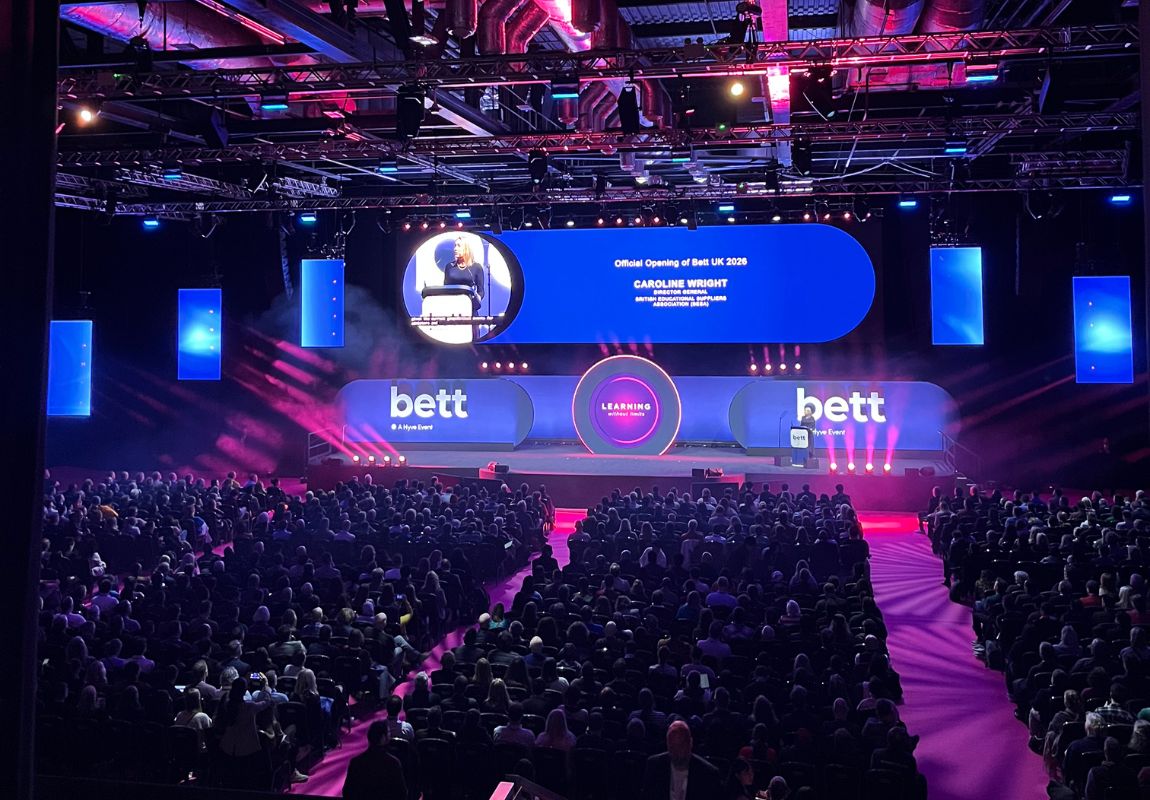



On 22-24 January, as part of IT Ukraine Association, Lionwood.software’s team visited Bett UK 2026 – a large EdTech event serving as a platform for educators, tech providers, investors, and stakeholders from about 130 countries to exchange the newest perspectives and best practices. Being among the 700+ exhibitors, our team had the chance both to network and witness the EdTech landscape as the year is starting – with the current challenges, solutions, dilemmas and hot topics. Here are some thoughts and insights we can share.
What better venue for this sort of event than London? Admittedly, we on the continent tend to have all sorts of “vintage chic” associations the Brits may scoff at when it comes to the combination of “UK” plus “education” – from Jane Eyre-style governesses to Gothic and Tudor-era buildings on campuses prestigious enough to be called campi, to wizards in capes and pointed hats teaching wingardium leviosa (not leviosA!) and so on.
Of these all, Bett UK is perhaps the closest to Hogwarts, or, rather, to Diagon Alley: a place where the various artifacts and spells of modern digital educational wizardry are abundant to the point you start straining your neck to keep an eye on everything that’s going on. The solid, stern-looking Excel London centre in Newham, with its concrete walls and glass panels, was in stark contrast with the variety of ideas that were discussed at the event.
Curiously, while the venue definitely contributed to the overall feel of the conference, it still felt quite global. We were pleasantly surprised to see not just EU participants, but quite a few fellow Ukrainian companies actively interacting with everyone else on site, too. Exhibiting our NIT platform for hybrid school learning, we discussed its hypothetical performance not just in UK realities, but various European contexts, too.
The choice of topics for the (rather impressive) agenda was refreshingly pragmatic – something we’d all have to really thank the organizers for. At a large-scale event like this, it would be easy to get carried away with spectacular but generic presentations in the vein of “imagine what AI could do!..” – but at Bett, it was more about “here’s how to make AI do what you need it to”, as well as “so here are digital aspects of education besides AI that we now know how to improve”.
For example, even on Day 1, in a flagship session, Professor Hannah Fry and Amol Rajan were already discussing the topics of what learning itself really looks like in an AI-saturated context we’ve all found ourselves in. Later on, there were practical, hands-on sessions (dubbed “Tech User Labs”) from Microsoft, Lenovo, Canva, and other tech players demonstrating the actual modes of use of AI by educators.
This focus on putting the educator as not just a “human-in-the-loop” (the way tech like to put it) but the ultimate creator is, by the way, as necessary as it is demanding in terms of thinking paradigms – something demonstrated by Dr Helen Crompton at her Arena talk.
In fact, pedagogy was consistently put first, even though there was no shortage of tech-related discussion. There was a dedicated locale called “Teaching and Learning Theatre”, where sessions led by Stuart Walker, Cheryl Shirley, Bogdan Pop, and James Culley focused on putting digital strategy into action. Our own agenda being packed as it was, we had very few moments to appreciate what was going there, but as a team of developers who treasure real feedback above many things, we sincerely applaud here – whenever there’s talk of EdTech, the “Ed” part should be given even more immediate attention by everyone, especially the “Tech” side.
There was also a wealth of productive discussions and demonstrations on the operational side of things: digital governance, strategy, and security. Stephen Morales of ISBL presented an interesting view on the five pillars of education: culture, people, productivity, systems/data, and improvement. In general, system integration and building a culture of efficient tech use in education was deservedly a big topic – in our own experience with NIT, too, it’s not all about the tech itself but the human and organizational component, as well.
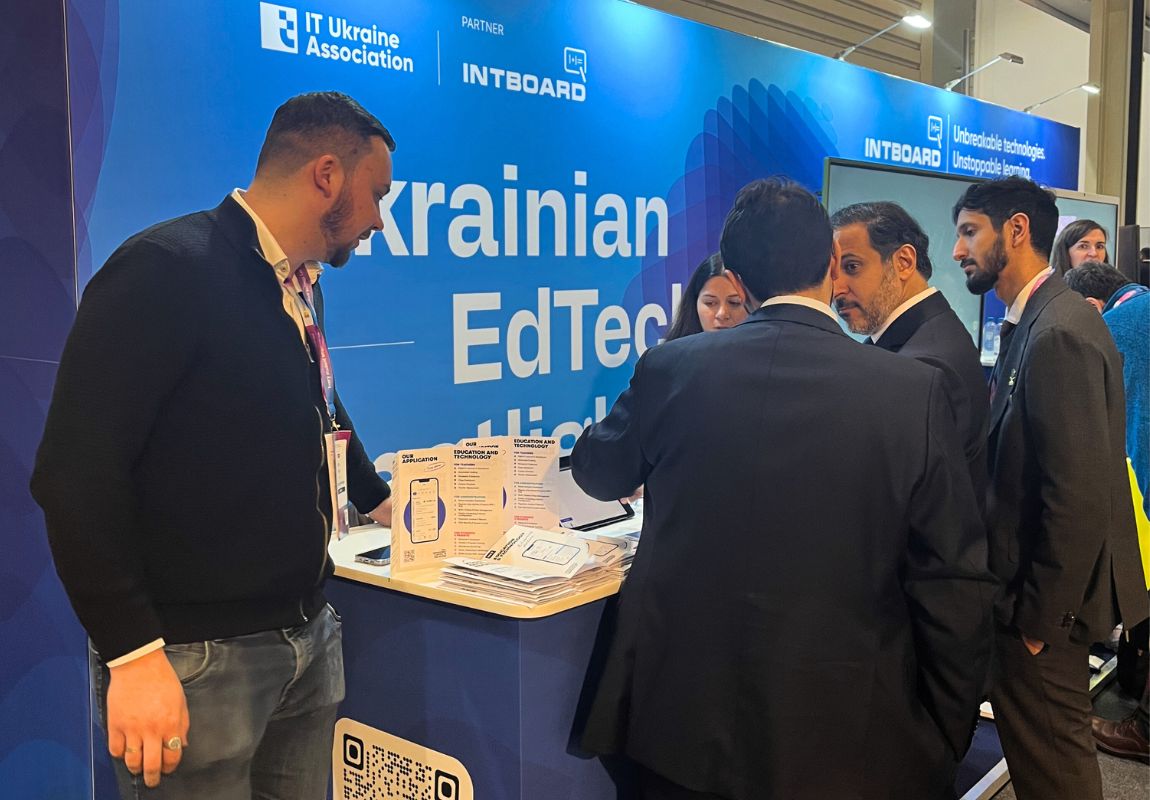
Finally, a strong focus on the human side of EdTech was felt throughout the event thanks to the topics of engagement, tackling absenteeism, ensuring inclusion and equity. These questions are, interestingly, quite tech-laden, too at times. One of the Tech User Labs offered a glimpse of what AI in offline settings (like certain classrooms with limited resource availability) was capable of – which is already a question of equity. Arena talks featured inclusion and innovation panels with multi-disciplinary experts on SEND, wellbeing, and learner support.
Overall, the really inspiring aspect of this event is the tendency towards a holistic vision of education – as a bundle of tightly interwoven threads of learning, organization, tech, human interaction, operative management, resources, and psychological factors. This is something we as an EdTech provider have worked with for years now, watching this vision take shape while development not just the NIT platform (which is already quite comprehensive at this point) but psychological assistance chatbots for students, college tuition program management software and other diverse projects.
No aspect of education exists in isolation from the others, and the right approach is endless attention to the interconnections between the different factors. It is this, ultimately, that makes EdTech projects usable and loved as much as we love our favourite tutors from school.
For more information about the NIT platform, click here. To learn more about Lionwood.software’s expertise and services in EdTech in general, click here or contact our team at any time.