


Service: Custom AI Software Development for Logistics

Logistics has never been easy, and today’s operations across and around supply chains are more complicated than ever. AI can help make sense of large, constantly changing datasets and support decisions across transportation, warehousing, inventory, and supply chain operations. At Lionwood, we develop AI-powered logistics solutions around specific operational problems — from demand forecasting and route optimization to predictive maintenance, document processing, and supply chain risk monitoring. The goal isn’t to add AI for its own sake, but to connect it to tangible operational outcomes.

GET EXPERT ADVICE
When to Consider AI Software for Logistics
Too many variables for manual planning

Too many variables for manual planning

Routes, vehicle capacity, delivery windows, traffic, fuel costs, workforce availability, and inventory levels can interact in ways that make optimization increasingly difficult as operations grow.

Demand is difficult to predict

Demand is difficult to predict

Seasonality, promotions, market changes, weather, and other external factors can make historical averages insufficient for planning inventory and capacity.

Problems need to be detected before they become disruptions

Problems need to be detected before they become disruptions

Anomalies in vehicle telemetry, warehouse operations, orders, or supply chain data can provide early warning signals when monitored systematically.

Data exists, but decisions still happen manually

Data exists, but decisions still happen manually

Many logistics organizations already have large amounts of data in ERP, TMS, WMS, telematics, and other systems. AI can turn some of that data into predictions, recommendations, or automated actions.

Operational teams spend too much time on repetitive information work

Operational teams spend too much time on repetitive information work

Document classification, extraction, validation, reporting, and routine communication are often good candidates for intelligent automation.

Existing systems don't see the whole picture

Existing systems don't see the whole picture

AI can connect signals across transportation, inventory, warehousing, and external data sources to support decisions that cross traditional software boundaries.

Too many variables for manual planning

Too many variables for manual planning

Routes, vehicle capacity, delivery windows, traffic, fuel costs, workforce availability, and inventory levels can interact in ways that make optimization increasingly difficult as operations grow.

Demand is difficult to predict

Demand is difficult to predict

Seasonality, promotions, market changes, weather, and other external factors can make historical averages insufficient for planning inventory and capacity.

Problems need to be detected before they become disruptions

Problems need to be detected before they become disruptions

Anomalies in vehicle telemetry, warehouse operations, orders, or supply chain data can provide early warning signals when monitored systematically.

Data exists, but decisions still happen manually

Data exists, but decisions still happen manually

Many logistics organizations already have large amounts of data in ERP, TMS, WMS, telematics, and other systems. AI can turn some of that data into predictions, recommendations, or automated actions.

Operational teams spend too much time on repetitive information work

Operational teams spend too much time on repetitive information work

Document classification, extraction, validation, reporting, and routine communication are often good candidates for intelligent automation.

Existing systems don't see the whole picture

Existing systems don't see the whole picture

AI can connect signals across transportation, inventory, warehousing, and external data sources to support decisions that cross traditional software boundaries.

01 / 06
Related Logistics Software Services
/ 01 Web App Development

We design and develop tailored web-based solutions that can function as centerpieces of dedicated digital ecosystems, including those organized around learning goals.

/ 02 Mobile App Development

We build native and/or cross-platform mobile apps with a focus on user adoption and convenience that can function as standalone solutions or supplement an entire suite.

/ 03 AI Consulting

We help establish the optimal use cases for AI implementation within your workflows, making sure it brings actual value — and devise a development-ready roadmap.

/ 04 AI Integration

We integrate AI capabilities into the existing infrastructure based on clearly defined use cases so that AI enhances the ecosystem harmonically as a natural extension.

How We Work On Logistics AI Solutions
01

Discover the Use Case

We identify the decision or workflow where AI could create measurable value and assess its feasibility, constraints, and data requirements.

02

Prepare the Data

We integrate, clean, normalize, label, and structure the relevant data so it can support reliable model development.

03

Prototype & Validate

We develop a working PoC or MVP and test its predictions, recommendations, or automation against real-world conditions.

04

Integrate & Improve

We connect the solution with the existing ERP, TMS, WMS, telematics, or other infrastructure and monitor its performance after deployment.

01

Discover the Use Case

We identify the decision or workflow where AI could create measurable value and assess its feasibility, constraints, and data requirements.

02

Prepare the Data

We integrate, clean, normalize, label, and structure the relevant data so it can support reliable model development.

03

Prototype & Validate

We develop a working PoC or MVP and test its predictions, recommendations, or automation against real-world conditions.

04

Integrate & Improve

We connect the solution with the existing ERP, TMS, WMS, telematics, or other infrastructure and monitor its performance after deployment.

01 / 04
AI Solutions for Logistics and Their Impact

Different logistics AI applications solve different problems, so we design the technology around the operational metric that actually matters.

<2x

more accurate demand forecasts

What you get
  • Demand prediction models
  • Inventory optimization recommendations
  • Multi-warehouse redistribution logic
  • ERP/WMS integration

Using data from ERP, POS, supplier databases, and other sources, demand forecasting models can identify sales patterns, seasonal fluctuations, and other signals to predict future demand and inform inventory decisions.

Our Approach
Crystallizing use cases before jumping to possibilities

Custom AI development makes sense when the value depends on your particular combination of routes, assets, data, constraints, legacy systems, or service model. We therefore start with the operational process rather than selecting an AI technology first — and we treat integration, explainability, user adoption, and ongoing model performance as part of the solution rather than afterthoughts.

  • Start with the operational decision — not the AI model.
  • Use existing data where possible rather than creating unnecessary data infrastructure.
  • Integrate with the systems already running the business.
  • Keep people in control of consequential operational decisions.
  • Measure the model in production and improve it as conditions change.
WHEN COMPLEX OPERATIONS NEED A DIGITAL CONTROL LAYER
Client's problem
  • Vehicle transportation involved multiple parties and operational stages.
  • Customers needed visibility into purchase and delivery progress.
  • Employees needed mobile tools alongside the central platform.
  • Operational information needed to be consolidated.
  • Communication and workflow management needed to happen in one ecosystem.
Solution

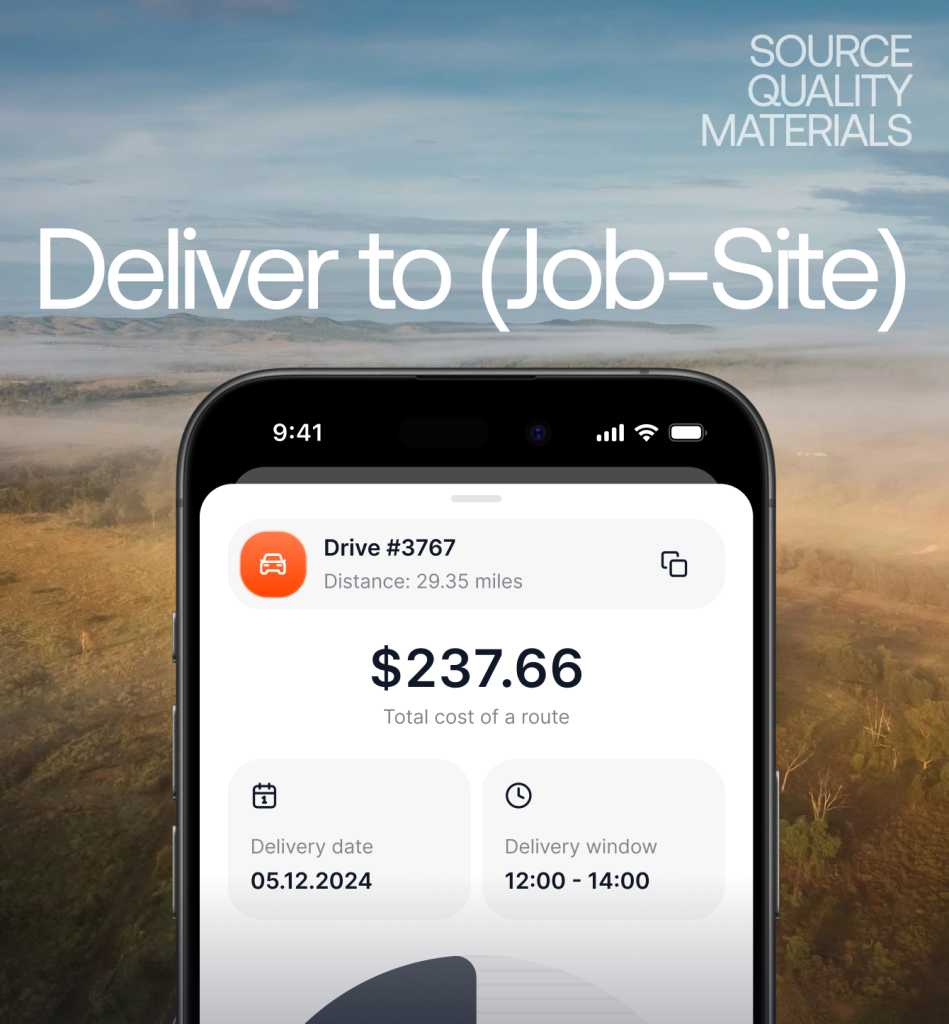
Lionwood built a web and mobile vehicle-transportation platform supporting operational management, customer communication, and visibility across the vehicle procurement and delivery workflow.

Solutions

Discover what AI can actually do for your logistics operations.

Book a meeting
What Our Clients Say

Rating on Clutch [ 45 reviews ]

Kaspars Eglins

Board Member, KleinTech Services

Kaspars Eglins
Kaspars Eglins
"Our web performance has improved overall, and our clients are always satisfied with Lionwood.software’s deliverables. Communicative and quick, Lionwood.software provides requested resources on schedule and delivers on or ahead of time. Their adaptability is particularly…

Ava Greve

Chief of Customer Support, Dizmo AG

Ava Greve
Ava Greve
"Their support has been in sync and on time despite the Russian Invasion of Ukraine. Their team fosters a positive relationship by being communicative and available. Ultimately, they are dedicated to the project, displaying interest and flexibility for the product’s success"
View Case

Andrew Laquis

Director, Shyft.tt

Andrew Laquis
Andrew Laquis
"Lionwood.software is organized and diligent with meetings. They provide timely responses and delivered projects on time and within the budget. The team handles the changes and updates in a fast and streamlined approach. Email and WhatsApp are used for communication."
View Case
HAVE A PROJECT IN MIND?
LET’S TALK

What is your project about? Share a few details and we’ll respond with practical next steps and a realistic view of scope and approach.

Fill the form
Frequently Asked Questions

AI can support demand forecasting, inventory planning, route optimization, fleet scheduling, predictive maintenance, warehouse operations, document processing, supply chain risk monitoring, ETA prediction, and other data-intensive workflows. The appropriate use case depends on the data available and the operational decision you want to improve.